Editorial Link Quality: A Page-Level Checklist
By Jake9 min read
On this page
An editorial link should make sense in the page where it appears and help the reader reach relevant information. Evaluate the actual placement, its context, and the destination. A domain score or a promised “dofollow” link is not a complete quality assessment.

What you’ll learn
- Inspect the source page and destination together.
- Separate relevance, editorial control, and technical status.
- Use explicit acceptance and rejection reasons.
Review the placement before considering a score
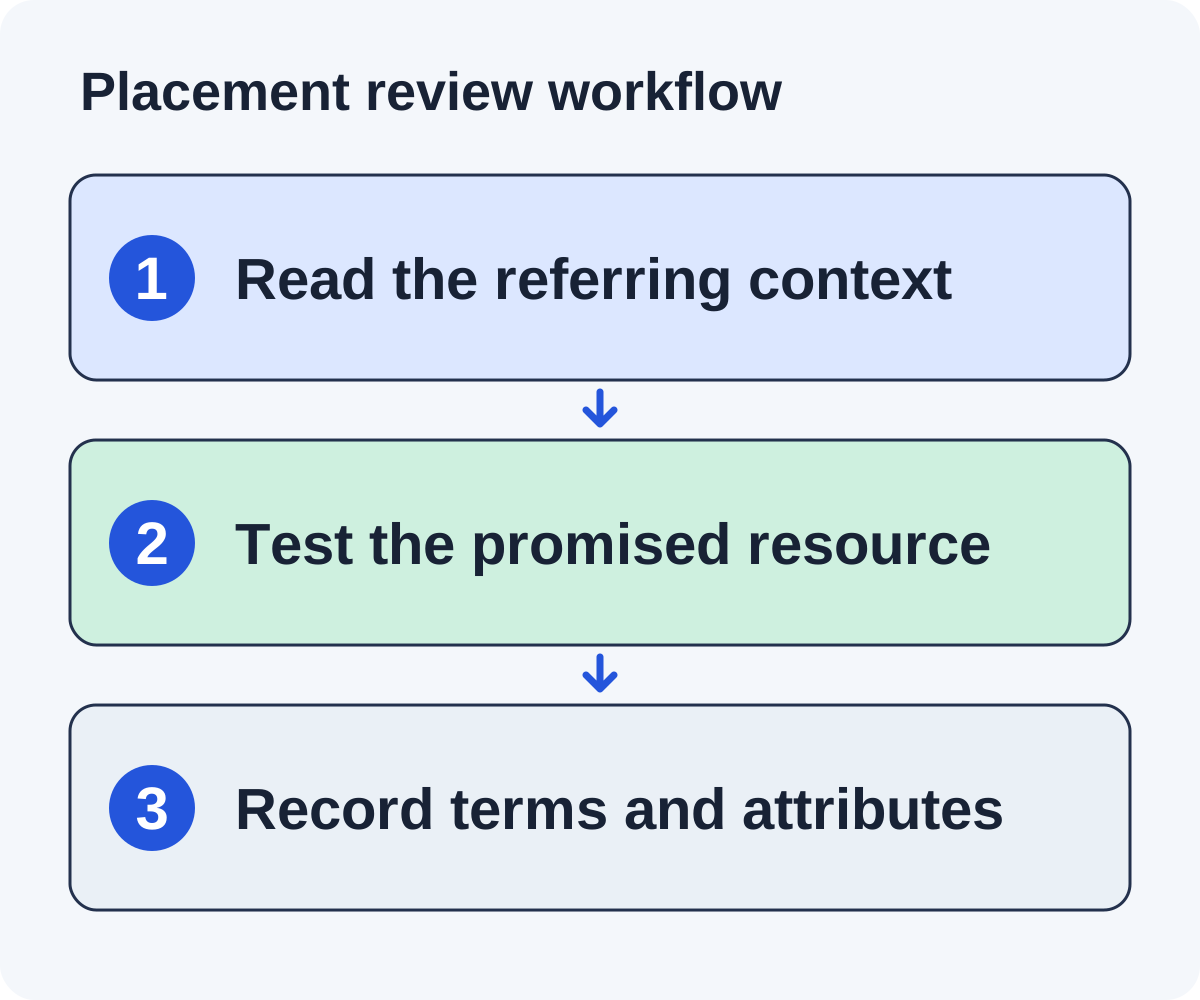
Begin with the page and destination open side by side. Read the section as a normal visitor would. Then follow the link and ask whether the destination completes the task the sentence promised. This catches a common mismatch: a link that technically works but takes the reader to a broad sales page instead of the named worksheet.
Write the context in observable terms. “A public tutorial cites a refund worksheet in its worked example” is a reviewable statement. “A powerful link from an authoritative site” hides several unanswered questions. Keep audience, content purpose, access, maintenance, and commercial terms as separate observations.
Use pass, investigate, and fail rather than a made-up aggregate score. A missing destination or undisclosed placement condition should not be canceled out by a high domain metric. Essential fit and accuracy problems need correction or rejection. A missing nonessential detail can remain under investigation while the rest of the evidence is retained.
Review prospect pages with the same criteria before outreach. You should not discover only after receiving a price quote that the publisher proposes an unrelated insertion. The domain rating and relevance guide explains how to keep provider metrics in a supporting role.
Record what you can verify, and keep missing information visible. “Looks authoritative” is less useful than “the article explains this calculation and cites the worksheet in the worked-example section.”
Use a placement review rubric
- Relevance: The audience and topic match the destination.
- Context: The surrounding text explains why the reference is useful.
- Accuracy: The description and destination are factual.
- Transparency: Commercial relationships are handled appropriately.
- Technical state: The source and destination are accessible, and the actual link can be inspected.
Mark each dimension pass, investigate, or fail. Treat an essential failure as a reason to decline or request a factual correction, rather than averaging it away with a strong domain score.
The rubric is an editorial review tool, not a ranking formula. It helps your team make consistent decisions without pretending to calculate Google’s treatment of a particular placement.
Compare good, weak, and rejected contexts
The following cases are illustrative.
| Placement | Review result | Reason |
|---|---|---|
| An MRR tutorial references a relevant refund worksheet | Good fit | The resource completes the calculation discussed. |
| A relevant article links the broad homepage where it promises a worksheet | Needs correction | The destination does not match the promise. |
| An unrelated article inserts a keyword-rich commercial link | Reject | No useful reader context supports the insertion. |
The second case can be repaired with the correct destination. The third has a deeper fit problem; changing the anchor does not necessarily make it useful.
Do not evaluate quality only after negotiating a placement. Apply the same rubric to prospects so weak contexts are excluded before writing.
Audit an illustrative placement from sentence to destination
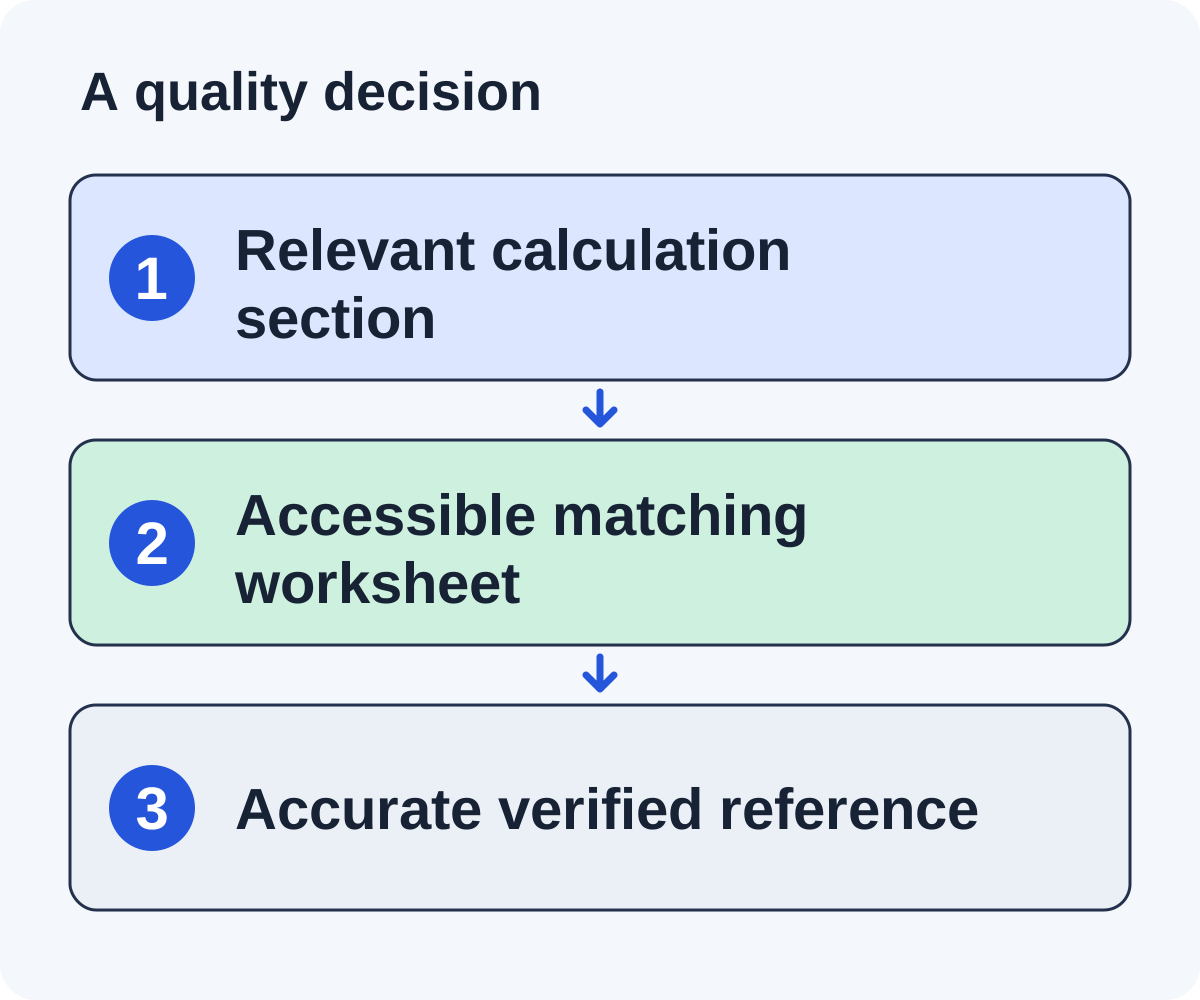
This fictional example concerns a finance tutorial linking to an MRR worksheet. The sentence says the worksheet demonstrates a partial refund. Review the promise first: a reader expects the calculation, not simply a company profile.
- Inspect the surrounding explanation. The link belongs in a section discussing revenue adjustments. A similar anchor in an unrelated paragraph would need a different fit judgment.
- Follow the actual destination. Check the final URL after redirects. Confirm the refund example exists, its assumptions are stated, and access requirements match the description.
- Read the anchor and nearby wording. The publisher’s wording should describe the resource accurately. Request a factual correction if the page promises a feature the resource lacks; do not require a particular SEO phrase.
- Record the relationship. Note whether money, goods, or another commercial arrangement was involved. Preserve the disclosed terms and the link attributes actually present.
- Save the verification. Store the referring URL, destination, checked date, and a short excerpt or observation sufficient for a teammate to revisit the same context.
Suppose the destination now redirects to a product homepage. The right outcome is “needs destination correction,” even if the publisher is well known. If the link was added to a paragraph about an unrelated topic, the issue is contextual relevance rather than a redirect. If the publisher declines your suggested correction, record that decision instead of treating the unresolved placement as fully approved.
This process evaluates usefulness and accuracy. It does not calculate a ranking benefit. Technical accessibility, sensible context, and transparent commercial terms are evidence you can review; Google’s treatment of an individual link is not a value you can infer from this worksheet.
Check attributes and commercial disclosure
Inspect the actual HTML anchor, destination, and attributes. Record what is present rather than relying on a vendor’s promised label. A link can be useful for readers regardless of whether it passes an assumed ranking benefit.
Google’s outbound-link guidance recommends rel="sponsored" for paid links and describes other qualification attributes. Do not ask a publisher to remove a required disclosure or attribute to make a commercial placement appear editorial.
Its spam policies also address links created primarily to manipulate rankings. Review proposed arrangements under your organization’s policy rather than treating a link label as an assurance of safety or effectiveness.
If a publisher chooses not to link, or qualifies a reference differently from what you hoped, record the actual outcome. Editorial discretion belongs with the publisher.
Respond to paid or conditional placement offers
When a publisher offers a paid listing or sponsored inclusion, classify it as a commercial opportunity and review it under your organization’s policy. Ask what the reader sees, where the placement appears, how the relationship is disclosed, and what qualifications apply. A sales offer is not an earned editorial citation just because it appears inside an article.
Google’s link qualification guidance recommends rel="sponsored" for paid links. Its spam policies describe links created primarily to manipulate rankings. Preserve the publisher’s actual terms and attributes, and do not ask for a commercial arrangement to be disguised.
If the offer conditions placement on removing disclosure or inserting an unrelated keyword-rich sentence, decline or escalate the proposal internally. Changing the wording does not repair an underlying arrangement that depends on misleading readers. Likewise, a promise of a permanent “dofollow” link does not establish readership, fit, or a guaranteed search result.
You can evaluate a transparent sponsorship for its actual business purpose, such as reaching a relevant audience, while reporting it separately from editorial outreach. Use verified referral observations where available. Do not relabel a paid placement as an organic editorial win in a client report.
Maintain the record after publication
Store the referring URL, destination, context, attributes, commercial status, first verified date, and last checked date. A promised addition and a live reference need different states.
Recheck important placements after page changes or site migrations. A moved destination, removed section, or newly gated resource can affect usefulness even when the link technically remains.
Use referral and search observations as separate evidence. A single placement does not establish a causal ranking improvement. Avoid assigning an invented dollar value or traffic estimate to it.
The competitor prospecting guide helps discover candidates; this rubric helps decide whether the specific reference is worth pursuing and maintaining.
Review a changed context even when the link remains
Suppose a fictional tutorial originally cited a public project-handoff checklist beside a worked example. Months later, the publisher rewrites the section into a software buying comparison but leaves the same anchor. The link is still technically present, yet its reader context has changed.
Read the new paragraph and follow the destination. Does the description now imply that the checklist is a complete project-management product? Does it promise features the resource never supplied? Does the public page still match the article’s current purpose?
Record the context change separately from removal. A live anchor is not enough to preserve an earlier quality judgment. If the description is inaccurate, request a factual correction through the appropriate route. The publisher may revise the wording, relocate the reference, or remove it.
Do not count the same maintained link as a new placement simply because you rechecked it. Keep first verified date, last checked date, and material changes as separate fields. This preserves the distinction between acquisition and maintenance.
Likewise, if your own checklist becomes a gated product resource, review whether the existing “public checklist” description remains accurate. Maintain a useful access route or update the scope you communicate.
Quality is a dated observation of a relationship between the sentence and destination. Keeping that relationship accurate is more useful than reporting only that a link still exists on a familiar domain.
Keep quality checks useful after publication
A placement review has a date. The referring article can change, the resource can become gated, and a migration can alter the destination. Prioritize rechecks for important resources and known changes rather than assuming that a once-valid reference is permanently accurate.
Record distinct maintenance outcomes: accessible and accurate, destination changed, reference removed, context changed, or unable to verify. “Unable to verify” should not automatically become “lost.” Preserve the reason, such as a temporary access problem, and repeat the check when appropriate.
Is a nofollow link automatically low quality?
No. A qualified link can still guide readers to a useful resource. Record the attribute without treating it as a complete editorial quality verdict or promising a ranking effect.
Does a well-known domain make an irrelevant placement worthwhile?
Its reputation does not resolve a mismatch in the actual paragraph. Review what the reader is being told and where the link leads. A familiar publisher can host an unsuitable page.
Should we report a promised placement as a live link?
No. Keep an approved request separate from a verified reference. Inspect the page after the publisher says it is updated, then record the observed URL, context, and attributes. That distinction prevents optimistic reporting from becoming your campaign’s evidence.
Put it to work
Use the companion worksheet to apply the decisions in this guide to your own campaign.
Download the worksheet (.txt)Sources and further reading
See what is worth pitching for your site.
Linkade finds relevant pages and writes pitches from their content. Add your domain and inspect prospects before choosing a paid plan.
Start free