How to Find the Right Contact for Link-Building Outreach
By Jake9 min read
On this page
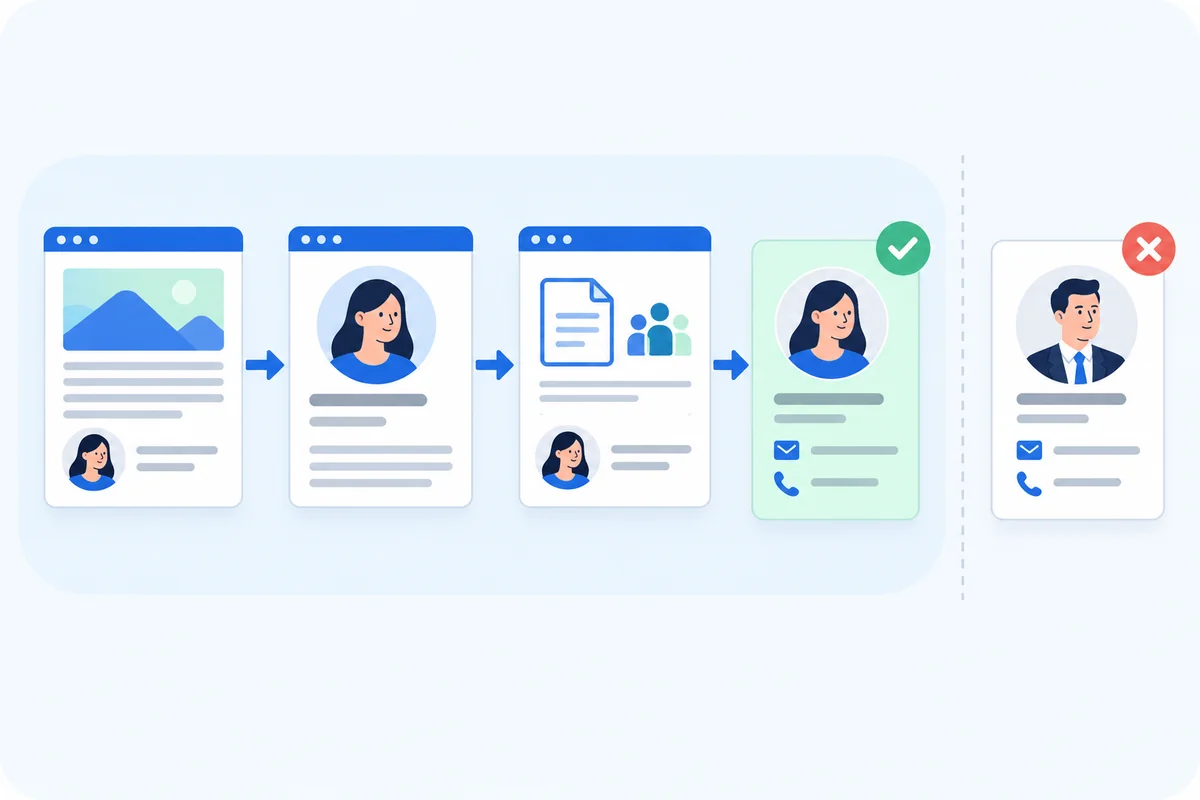
The right outreach contact is the person responsible for evaluating or updating the page you want to improve. Finding an address is only one part of the task. This guide separates editorial ownership, current contact evidence, address verification, and permission to send.
What you’ll learn
- Identify ownership before searching for an email address.
- Keep public source and role evidence with the contact.
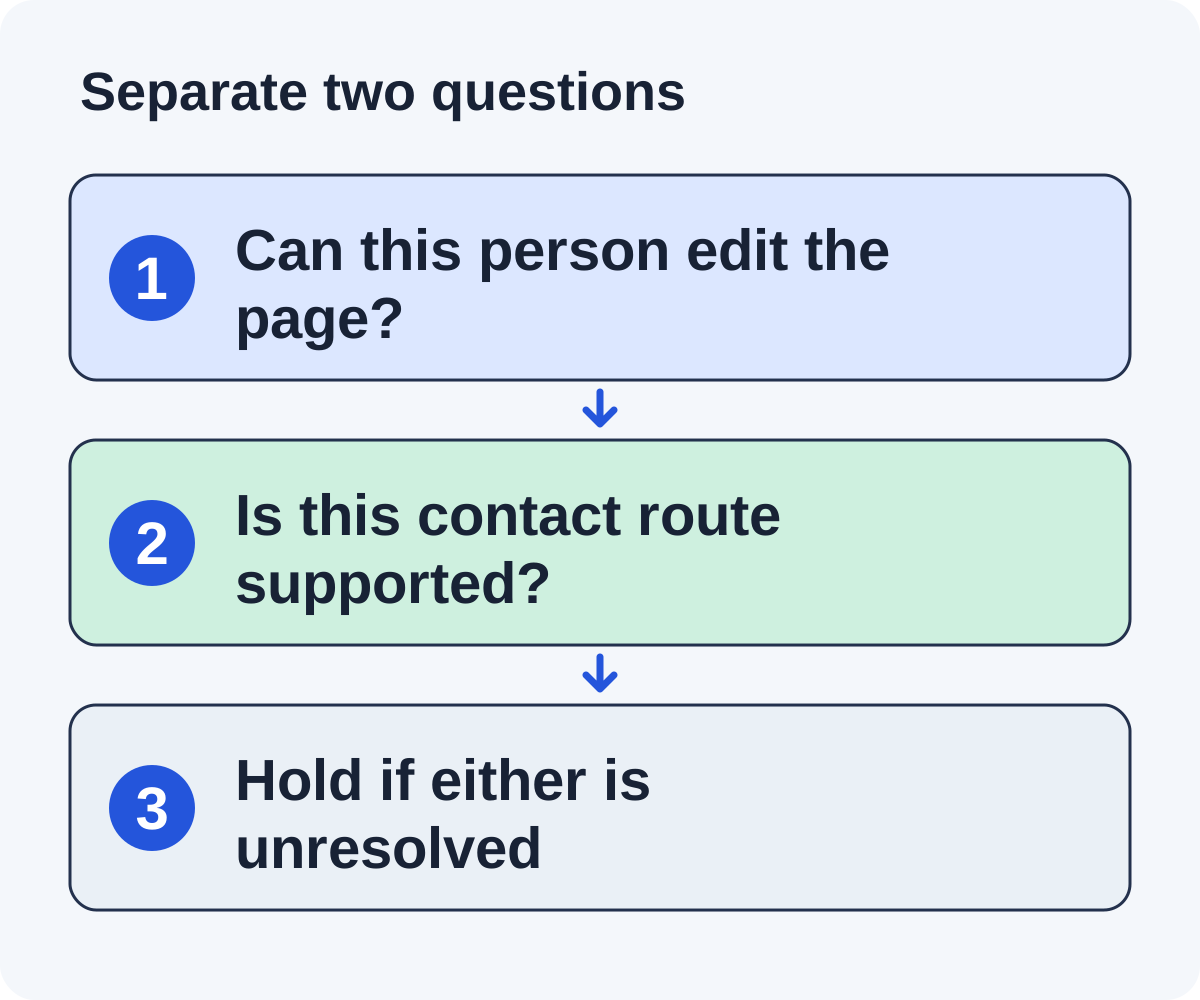
- Treat verification and outreach eligibility as separate decisions.
Follow a page-ownership research sequence
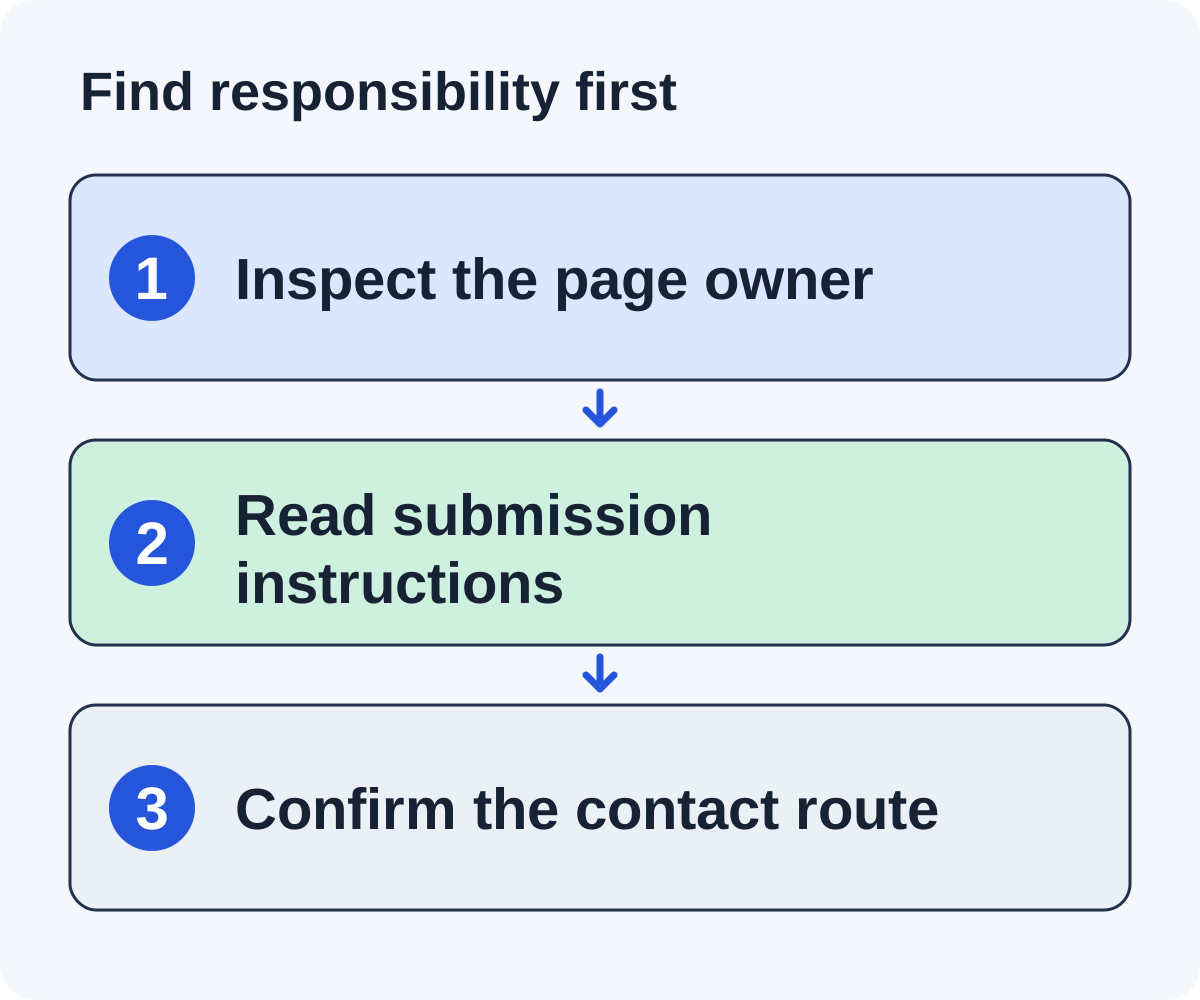
Start from the editorial page. Save the author, publication, update information, and any submission instructions. The goal is to find the person or team responsible for changing that page, not the most senior person whose address can be discovered.
Inspect the author and publication
An author bio can show whether the writer is a current staff member, a contributor, or a guest. Follow the public editorial or contact page to understand who handles updates. If the author writes freelance articles but cannot revise published material, the publication’s editor may be the appropriate owner.
Read submission instructions before enrichment
A publication may accept resource suggestions through a form, route corrections to a dedicated address, or prohibit unsolicited product submissions. Record the relevant rule. Finding a personal address does not improve an opportunity when the publisher has already specified another path.
Search within the publication when responsibility is unclear
Look for a current masthead, editorial team, or about page. A narrow search such as site:publication.example editorial contact can help discover public pages. Treat the result as a lead to inspect, not proof that a named person currently owns the article.
Store both the responsibility source and the contact source. They may be different pages. “Editor for this publication, documented on the team page; address listed on the editorial contact page” is a clearer handoff than “email found.”
Record the role you need: editor for a resource collection, reviewer for a product roundup, or owner of a maintained tutorial. This makes the later contact search specific. A sales representative at the publication is not automatically an editorial contact.
Use a contact decision tree
- Explicit submission route? Use it and follow its requirements.
- Current page owner identified? Check the author or editor profile for a business contact route.
- Publication-wide editorial team? Find the role responsible for this category.
- Ownership unclear? Investigate or skip rather than inventing responsibility.
A general editorial inbox can be a reasonable route when the publication offers it for suggestions. Keep the reason for choosing that address. The decision should not be “it was the only email the tool found.”
Where you use a contact provider, inspect the supporting source and match the name and role to the opportunity. Database confidence does not establish that the person currently maintains the article.
Work through three contact examples
These are fictional examples designed to show the decision.
| Evidence | Decision | Reason |
|---|---|---|
| The resource page names a maintainer and links a suggestions form | Use the form | The publisher has specified the route. |
| An old freelancer byline, with no update responsibility | Investigate the current editor | Authorship does not prove present ownership. |
| A provider finds the CEO’s address for a large publication | Reject that contact for now | No evidence connects the CEO to the page update. |
If the current editor cannot be identified, keep the opportunity in an investigation state. A good page can be a poor sending candidate until contact evidence improves.
Do not escalate through several unrelated employees after a decline. Keep a publisher-level history so another teammate does not restart the same request under a different contact.
Check the address without overstating what it proves
Distinguish a published address, a provider-discovered address, an inferred address, and a verified result. Store the source and date. An inferred address should not be presented internally as something the editor publicly supplied.
Hunter, for example, describes email discovery and verification tools. Whatever provider you use, read its result categories and limitations. A verification result concerns the address check; it does not prove editorial interest, inbox placement, or permission to send.
Keep missing, uncertain, and stale results visible. Do not silently convert “unknown” into “valid.” If your approved policy does not permit the contact or message, stop before drafting or release.
Store only the contact information needed for the workflow and apply your organization’s retention rules. Avoid putting personal contact data into public examples or reports.
Resolve three ambiguous contact situations
These invented examples show why page ownership and address availability need separate checks.
An old author bio and a current editorial address
A guide’s author profile has not changed for several years, while the publication lists a current corrections and resource-submission address. First read what that address accepts. If your request fits, use the documented editorial route. Do not assert that the old author still maintains the guide merely because the profile remains online.
A product founder quoted inside an article
The quoted founder is easy to identify, but the publication owns the roundup. Contacting the founder asks the wrong person to change somebody else’s page. Locate the editor, author, or submission route responsible for the list. Keep the quote source as contextual evidence, not as ownership evidence.
A relevant page with only a general contact form
Read the form’s purpose and publisher rules. If it accepts editorial questions, write a concise request tied to the page and ask for the appropriate route where necessary. If it is clearly a sales or customer-support form, do not pretend it is an editorial submission channel.
Record confidence with a reason
Use a status such as verified editorial owner, documented team route, or responsibility unresolved. Explain what supports the status. Confidence should not be a vague feeling generated by an email lookup tool.
When responsibility is unresolved, keep the prospect in investigation. Enriching several possible employees and sending the same pitch to all of them creates coordination problems without establishing who can act on it.
Prepare a handoff the reviewer can trust
The final record should include name, role, business contact route, public or provider source, checked date, editorial ownership evidence, and the sending eligibility decision. Link it to the exact candidate page and proposed resource.
Before a send, recheck roles that are likely to have changed and inspect earlier conversations. A new campaign should not ignore an existing opt-out or a previous editor’s instruction.
When the route is uncertain, consider a short routing question only if your policy permits it. Explain which page the suggestion concerns; do not conceal the eventual request behind a misleading message.
Once the contact passes these checks, move to page-based personalization. The worksheet preserves the decision trail so finding the address does not become a substitute for understanding the opportunity.
Document a technical-author handoff without guessing an address
In a fictional developer tutorial, the byline names Taylor, but the publication’s current contributor page says outside authors do not manage updates. Its corrections page directs technical amendments to an editorial desk. That public instruction is stronger routing evidence than guessing Taylor’s email pattern.
Create a contact record with the tutorial URL, relevant section, contributor-policy URL, editorial contact route, checked date, and uncertainty note. The role should say “publication’s stated update route,” not “verified personal owner” if you have not established personal ownership.
If a provider also finds Taylor’s address, retain it as a provider result only if your approved process permits doing so. It does not override the publication’s instruction or establish sending eligibility. A successful address verification does not prove the person wants or controls the proposed update.
The first email can address the desk accurately and ask before offering anything: “Hello, I read your migration tutorial. Would the editorial desk be open to a link suggestion for it?” It carries no link and does not point out what the rollback section lacks; that detail waits until the desk says yes. Avoid pretending that the named recipient wrote or manages the page when the evidence says otherwise.
If the desk forwards you to a maintainer, preserve that referral and inspect existing publisher history before another send. Keep the same opportunity record and thread context. A referral is a handoff, not a reason to restart a generic sequence.
The final record should let another teammate explain both why the page deserves consideration and why this route was selected. If it cannot, the research is incomplete even when an email address is available.
What verification does and does not tell you
Does an email verification result identify the right editor?
No. An address check and an ownership check answer different questions. A mailbox may be technically plausible while belonging to the wrong role. Keep the page responsibility evidence beside the verification status.
Should you guess an address pattern?
A guessed pattern is a candidate, not a confirmed contact. Prefer a documented public editorial route where available. If your approved workflow uses inferred addresses, preserve that provenance and any uncertainty rather than labeling the record as publicly confirmed.
What if a domain is catch-all?
Record the verification provider’s actual result and limitation. A catch-all outcome does not confirm a specific person’s mailbox or responsibility. Do not silently convert uncertain address status into an approved contact.
What should happen after a wrong-contact reply?
Pause the sequence, record the correction, and inspect any suggested handoff. If the recipient provides a current editorial route, preserve the source of that referral. Coordinate the next request so the same publication does not receive competing pitches.
How much personal information should the record contain?
Keep the information necessary to explain the editorial contact and handle the request under your organization’s approved process. Avoid copying unrelated personal details simply because a profile makes them available. The reviewer needs responsibility and contact provenance, not an extensive biography.
How often should the record be rechecked?
Recheck when the source is old, the person’s role changes, the page changes materially, or a delivery or reply event contradicts the stored information. Preserve the date of each check. A contact found last year is not automatically the right contact for an update today.
Before handing the row to writing, confirm the exact target page, inclusion reason, responsible route, contact source, address status, and unresolved facts. That packet allows the next person to review the request instead of repeating discovery.
Put it to work
Use the companion worksheet to apply the decisions in this guide to your own campaign.
Download the worksheet (.txt)Sources and further reading
See what is worth pitching for your site.
Linkade finds relevant pages and writes pitches from their content. Add your domain and inspect prospects before choosing a paid plan.
Start free