How to Choose Link-Building Outreach Software
By Jake9 min read
On this page
Choose outreach software by testing the work your team needs to perform: page discovery, evidence capture, contacts, writing, approval, sending, replies, and verification. A useful buying process makes requirements and failure behavior visible before you commit to a plan.
What you’ll learn
- Turn your bottleneck into observable requirements.
- Run a five-page test without sending live prospect messages.
- Compare complete costs and exit requirements.
Define the job and the must-haves
Write the audience, asset, campaign formats, available review time, number of workspaces, and people who need access. Then name the task that is hardest today.
Separate must-haves from conveniences. Evidence visible to a reviewer, reliable suppression, and an assigned reply owner may be essential. A particular dashboard layout may be a preference.
Give each requirement an acceptance check. “Good AI” is vague. “The reviewer can locate the source of every factual sentence and missing evidence pauses release” is observable.
Include security, retention, and policy requirements relevant to your organization. Resolve them through appropriate evidence and owners rather than assuming a product category establishes compliance.
Turn the bottleneck into an acceptance brief
Describe one campaign and the task that currently consumes the most effort. For example, a founder promoting a public worksheet may need relevant page discovery and evidence-grounded drafts, while an agency managing many clients may need shared publisher history, permissions, and reliable handoffs. Those are different buying requirements.
Write the asset, audience, campaign formats, available review hours, reply capacity, workspaces, and people who need access. Then separate essential requirements from preferences. A useful acceptance brief states what must happen and how you will inspect it.
Replace vague labels with observed behavior. Instead of “strong personalization,” require the reviewer to locate the page observation supporting the draft. Instead of “good CRM,” require duplicate publisher history and an opt-out to survive an import. Instead of “advanced reporting,” require useful replies and verified references to remain separate.
Include your organization’s access, retention, security, and policy requirements with appropriate owners. A product category or marketing badge is not evidence that a particular requirement has been met. Ask for documentation or a demonstrable control where needed.
Keep the brief narrow enough to evaluate. You do not need every available feature. You need the workflow that addresses the bottleneck and preserves the necessary decisions.
Compare features as a connected workflow
Check how information moves from discovery to qualification, drafting, approval, send record, reply, and placement. A feature can exist while the handoff still requires substantial manual rework.
| Task | Acceptance question |
|---|---|
| Prospecting | Can you explain why the actual page fits? |
| Contacts | Are source, role, and uncertainty visible? |
| Drafting | Can factual claims be checked against evidence? |
| Approval | Is the release decision and draft version recorded? |
| Sending | Do caps, pause, reply, and opt-out controls work? |
| Reporting | Are replies and verified placements separate? |
Do not equate a large sending allowance with more useful opportunities. Review and reply capacity should determine what your team can operate.
When evaluating Linkade, inspect the site evidence behind each prospect, the first emails, Copilot (where you approve each email), Autopilot (where emails send without approval), and the actual send record. Apply the same requirements to every alternative.
Run a five-case evaluation with evidence
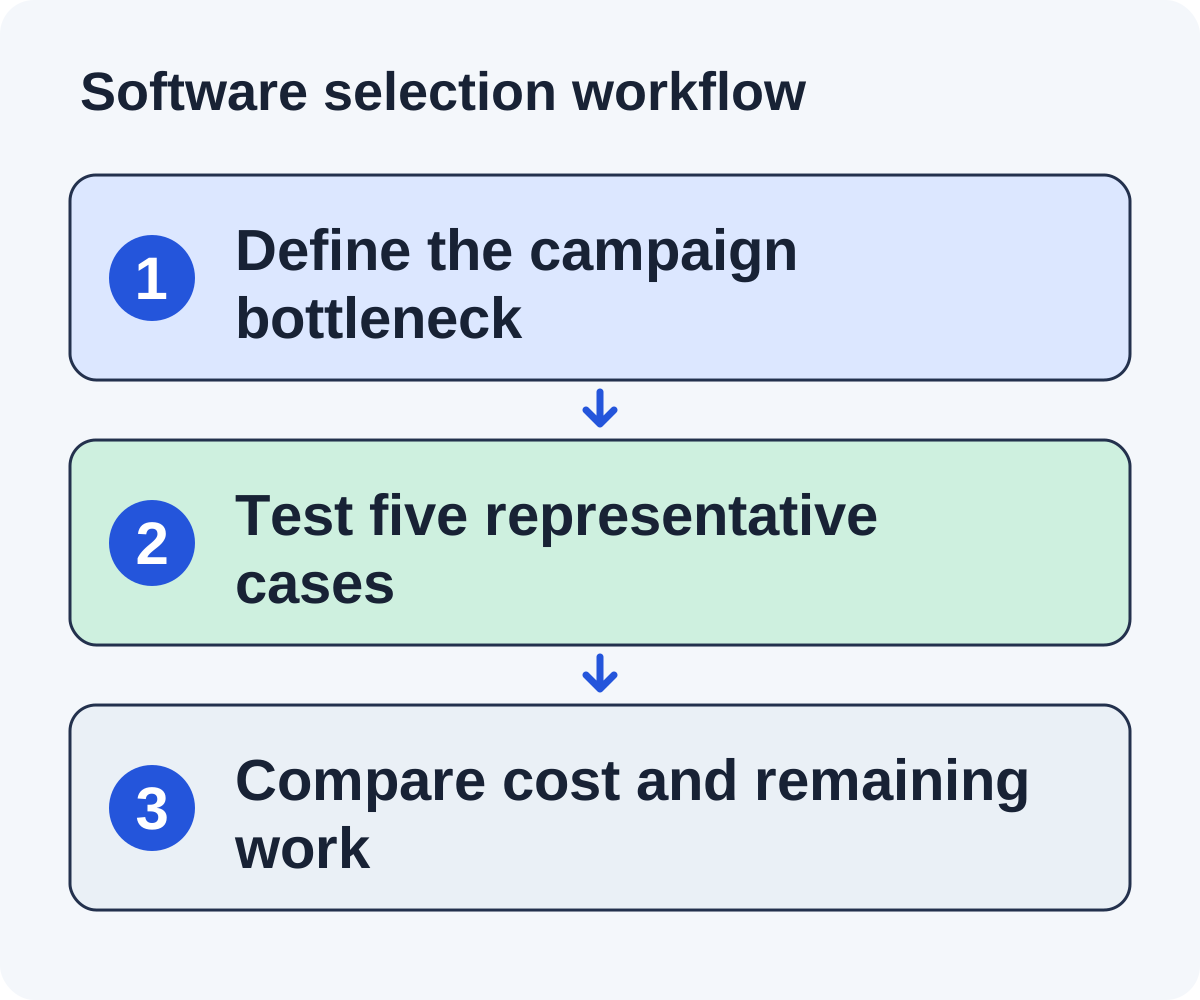
Use the same checked asset and product facts across the workflows you compare. Select five cases that expose different behavior. This is a small acceptance exercise, not a representative performance benchmark.
| Case | Expected behavior | What to record |
|---|---|---|
| Clear page and asset fit | Preserve the relevant section and distinct contribution. | Evidence location, draft accuracy, review minutes. |
| Irrelevant page | Reject or clearly flag the mismatch. | Reason and whether it remains out of release. |
| Duplicate publisher contact | Show history and avoid competing sequences. | Matching behavior and resulting queue state. |
| Missing contact evidence | Keep uncertainty visible. | Source availability and investigation path. |
| Ambiguous contribution | Require review rather than invent a useful difference. | Claims created, edits required, final decision. |
Inspect the actual draft sentence by sentence. Check page observations against the page and product claims against approved facts. A fluent draft that invents a relationship or feature should not pass because it reads well.
Time the complete work: setup, qualification, claim checking, edits, duplicate resolution, and export. Generating a draft quickly does not establish lower total effort if the reviewer must reconstruct its evidence.
Test sending controls in a safe setup or inspect an authorized demonstration. Confirm replies, declines, opt-outs, bounces, and pause behavior against your requirements. Do not send real prospect messages solely to evaluate a settings screen.
Save pass, unresolved, and fail results with the observed evidence. A must-have that remains unresolved needs clarification or another test before commitment. Apply the same standard to Linkade and every alternative.
The exercise is a product evaluation method, not a statistically representative performance benchmark. Record its scope and limitations.
Compare the complete cost and commitment
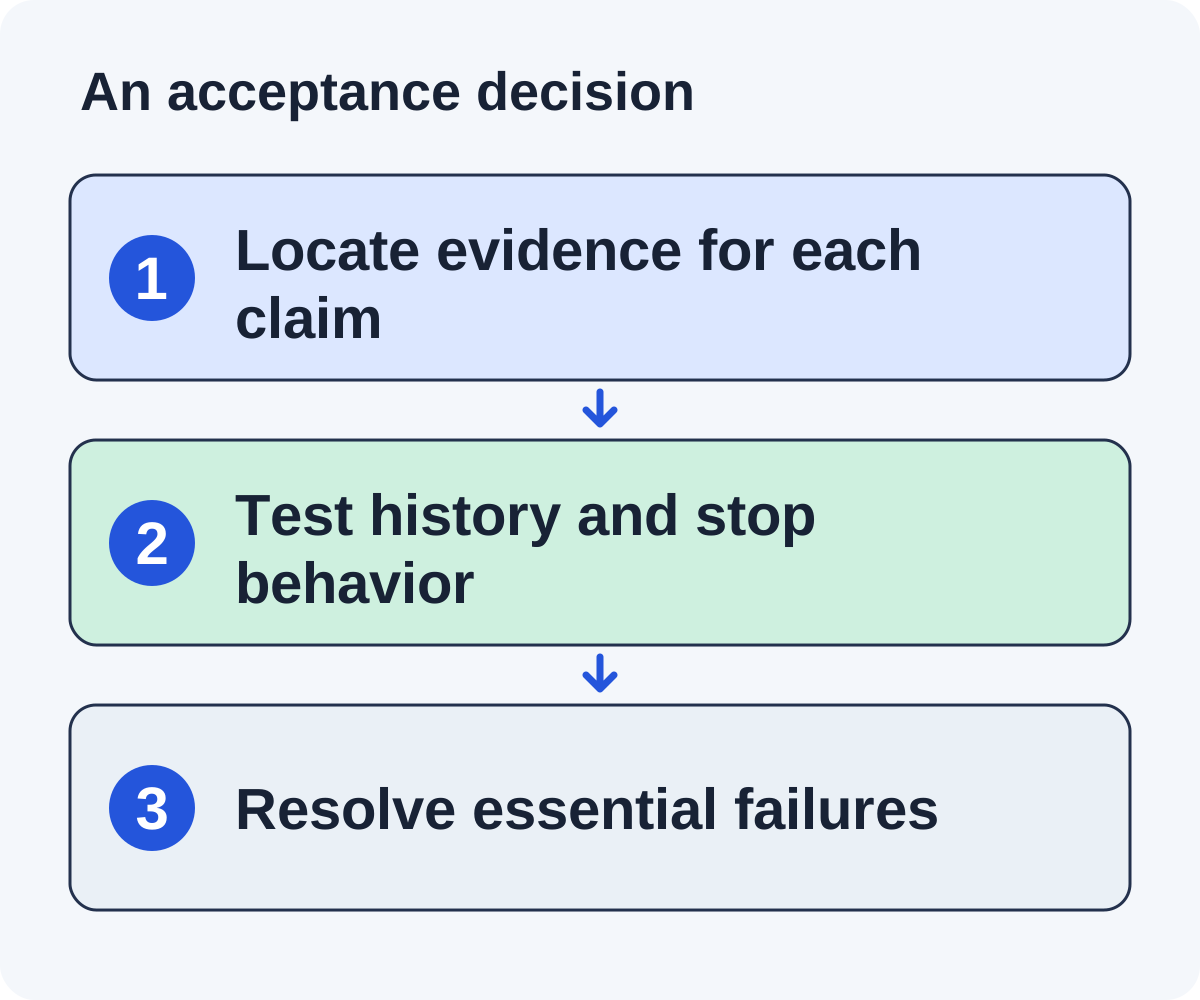
Collect current official prices, plan limits, billing frequency, commitment, and cancellation terms. Record the date checked. Feature tiers can matter more than the entry-level price.
Separate contacts, prospect credits, searches, emails, and workspaces. Estimate the labor remaining for research, review, replies, and maintenance. Use measured times where possible and label assumptions elsewhere.
For Linkade, consult current plans and distinguish standard pricing from the Founder plan, which is $99 monthly, open only to the first 20 teams, who keep that price for life. For other vendors, resolve conflicting or outdated pricing before buying.
The cost guide provides an illustrative budget. Do not assume two equally priced tools cover the same tasks or produce the same outcomes.
Evaluate the full handoff and migration path
Follow one opportunity from discovery to qualification, draft, approval, release record, reply, and verification. Check whether the evidence remains attached throughout. A feature can exist while the handoff still forces the operator to copy data manually or lose the reason a prospect was accepted.
Inspect a reply with the original message and asset context visible. Assign a new owner and confirm the history survives. Test what happens when the original owner is away, the campaign pauses, or the same publisher appears in another workspace.
Trial an import containing a declined publisher and a suppressed contact. The new record should not erase the old decision. Check the actual queue after import rather than relying only on a promise that suppression is supported.
Export a sample with page evidence, contact sources, draft and send versions, conversation states, next actions, and placement facts. Determine what cannot be exported and how your organization would preserve it during a change of systems.
Keep migration effort in the cost comparison. A cheaper subscription can still require substantial onboarding or reconstruction of publisher history. A more integrated workflow may reduce a specific handoff cost, but confirm that with your pilot rather than assuming the marketing description applies to your team.
Plan ownership and an exit before adopting
Assign who maintains product facts, reviews uncertain prospects, approves claims, handles replies, and verifies references. Software should support those responsibilities rather than leave them implicit.
Check how to preserve conversation history, suppression data, open tasks, and placement records if you change systems. Review export and retention behavior against your organization’s needs.
Start with a small pilot and defined acceptance criteria. If a must-have fails, resolve it or choose a different workflow. A polished demo should not override the evidence from your test.
Use the worksheet to record pass, unresolved, and fail results, with a reason for the final choice. The Pitchbox alternatives and BuzzStream alternatives guides offer focused shortlist frameworks once the requirements are clear. To set Linkade beside one tool at a time, see Linkade vs Pitchbox and Linkade vs BuzzStream.
Evaluate a narrow tool stack against an integrated workflow
A fictional team can combine a contact tool, shared spreadsheet, drafting assistant, and mailbox, or use a more integrated outreach application. Compare the handoffs rather than assuming either architecture is better.
In the separate stack, inspect how page evidence reaches the draft, how the approved version reaches the sender, how replies update the tracker, and how suppression applies to later imports. Each transfer needs an owner or demonstrated automation. A low subscription total can hide copying and reconciliation work.
In the integrated workflow, inspect the same evidence and states. Integration does not guarantee correct page understanding or a useful request. Test missing contact evidence, duplicate history, unsupported claims, replies, and pause behavior with the same cases.
Measure equivalent complete work. Include setup, review, corrections, reply operation, verification, and export. If one option requires more manual labor but gives the team necessary control, document that tradeoff. If the other removes a handoff, confirm the effect in your pilot.
Keep exit requirements in the evaluation. Your team should be able to preserve the records it needs whether they live across several tools or one application. Test a sample export and reconstruct an open conversation from it.
The buying conclusion should identify which workflow meets the must-haves and addresses the observed bottleneck at an acceptable total cost. Tool count, polished interfaces, and large allowances are secondary to that evidence.
Make a decision from requirements, cost, and remaining work
Collect current official prices and terms directly from vendors. Record billing frequency, commitment, allowances, feature tiers, seats, workspaces, and cancellation conditions. A displayed monthly equivalent does not necessarily mean a month-to-month contract.
Compare units carefully. Contact storage, searches, prospect credits, and messages are different allowances. Estimate the work that remains for your team and label assumed times. Include reply handling and asset maintenance, which are easy to omit from a demo-driven purchase.
Linkade’s standard plans (Starter at $149 and Growth at $399 monthly) and the Founder plan ($99 monthly, open only to the first 20 teams, who keep that price for life) serve different pricing contexts. Use current plan details and inspect prospects before choosing a paid plan. Do not assume the limited offer is available to every buyer or that a prospect credit guarantees a placement.
Write the decision around the bottleneck: “This workflow preserves the page evidence and reduces the manual preparation we tested while keeping claim approval with our reviewer.” That is more useful than choosing the tool with the longest feature list.
What if a preferred tool fails a must-have?
Ask for evidence that resolves the failure, reduce the planned automation boundary if appropriate, or choose another workflow. A polished demo should not override the result of your actual acceptance exercise.
What should the final buying record contain?
The campaign brief, essential requirements, five-case results, complete labor comparison, current terms, unresolved questions, owner responsibilities, and export plan. Revisit it when the campaign’s audience, workload, or team changes.
Put it to work
Use the companion worksheet to apply the decisions in this guide to your own campaign.
Download the worksheet (.txt)See what is worth pitching for your site.
Linkade finds relevant pages and writes pitches from their content. Add your domain and inspect prospects before choosing a paid plan.
Start free