Link Building Prospecting: Find Pages Worth Pitching
By Jake9 min read
On this page
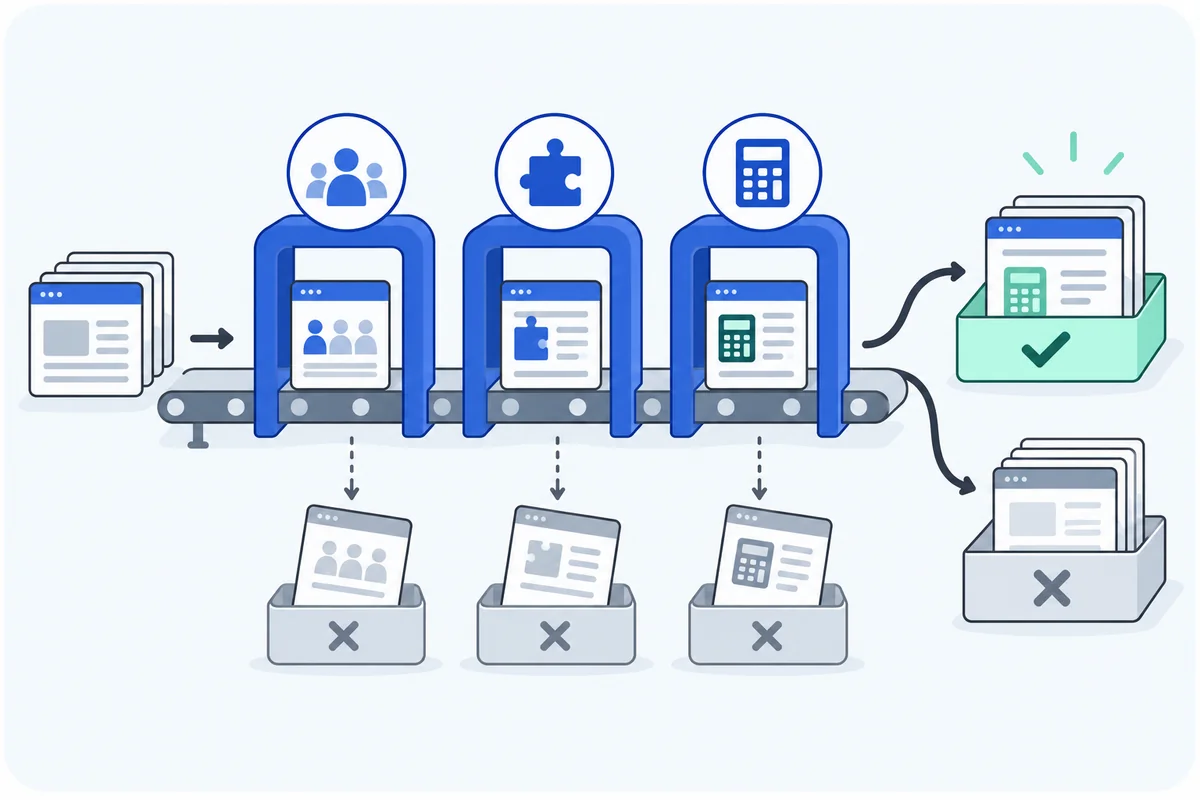
Link building prospecting means finding and qualifying pages that could reasonably reference your product or resource. The output is a list of defensible opportunities, with a reason for each one. Here is how to build that list without letting search results or domain scores make the decision for you.
What you’ll learn
- Search for the reader’s task and the editorial format.
- Use a simple pass, investigate, or reject decision.
- Keep page evidence beside every accepted prospect.
Define the opportunity before the search
Start with your destination page and the audience it helps. A public onboarding checklist has a different prospect pool from a product pricing page. Write the intended editorial context: “guides for SaaS founders choosing onboarding metrics,” for example.
Then choose the type of page you want to find. Resource collections, tutorials, and software roundups each have their own inclusion logic. Mixing all three into one unqualified list makes the writing stage harder because every candidate needs a different request.
Set exclusions before searching. Examples include unrelated industries, pages your team has already contacted, publisher submission policies you cannot meet, and commercial arrangements outside your campaign scope. These are your workflow choices, not universal SEO rules.
Build search queries around the job your asset performs
A prospecting query should describe the reader’s need and the kind of page that could use your resource. Start with the actual output: a migration checklist, calculation worksheet, product comparison, or detailed tutorial. Translate that output into the vocabulary a publisher might use.
For a fictional SaaS onboarding checklist, create separate query families: SaaS onboarding resources, customer activation checklist, and onboarding metrics guide. The first looks for collections, the second for practical steps, and the third for explanations where a checklist might add an action. Save the route with each result so you can later compare which route produced useful pages.
Use operators as discovery aids
Quotation marks can help find a specific phrase, and site: can inspect one known publication. For example, "SaaS onboarding" resources is an exploratory query, not a guaranteed list of resource pages. Google explains these operators in its search refinement guidance. Search results and operator behavior can vary, so evaluate the actual returned pages.
A long query filled with operators may exclude relevant pages with different wording. Keep a plain-language query alongside the narrower version. If both return mostly sales pages, change the editorial format or audience term rather than assuming no opportunities exist.
Do not turn the first result page into an acceptance list. Results can contain aggregators, dormant pages, sponsored directories, and irrelevant contexts. The purpose of searching is to create candidates for inspection; qualification starts after you open the page.
Discover candidates through several routes
Try a topic plus an editorial format: “SaaS onboarding resources,” “activation metric guide,” or “customer onboarding checklist.” Read the results beyond their titles. A promising headline can lead to an outdated sales page or a page with no suitable section.
Follow useful references inside articles you already trust. Look at a competitor’s referring pages when you have access to backlink data, but treat them as candidates to inspect. A competitor reference does not establish that your resource belongs in the same place.
Save the exact page URL, discovery route, and date. Deduplicate pages and domains deliberately. Two distinct pages from one publisher may have separate editorial needs, but they should not create two simultaneous pitches to the same editor.
For a manageable first pass, collect a small sample from each route. Compare qualification time and accepted opportunities before paying to expand a weak discovery method.
Use three gates instead of a magic score
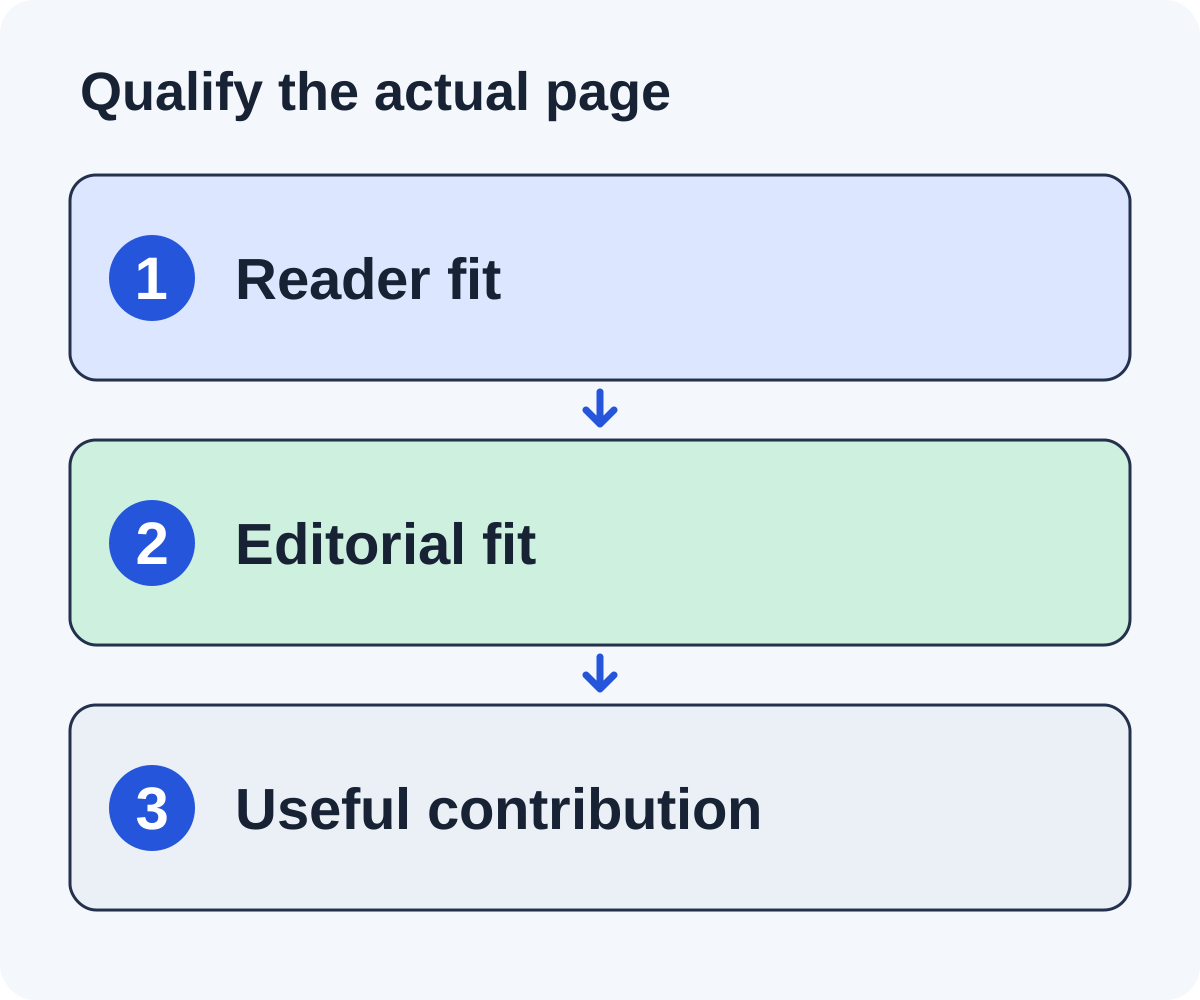
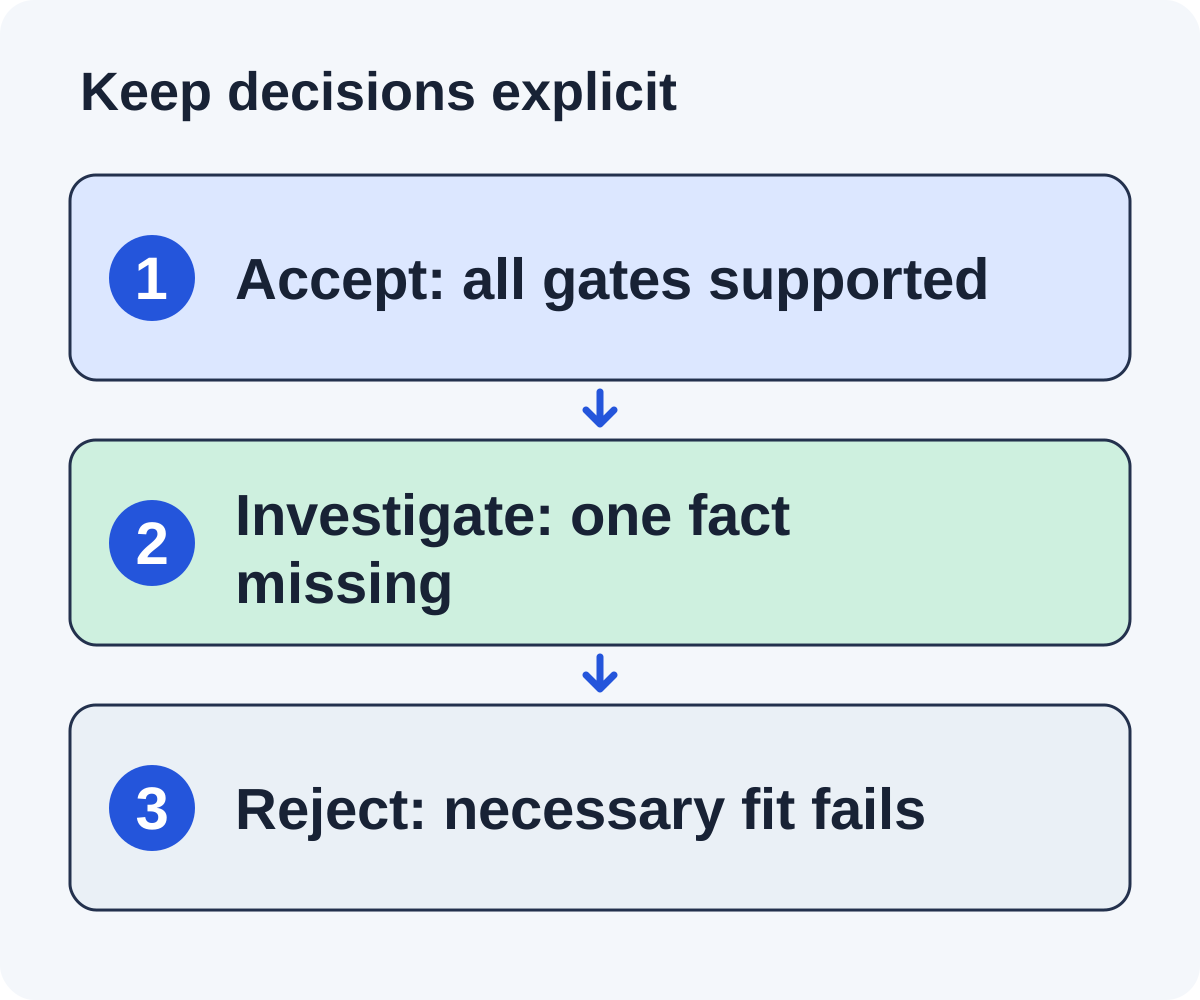
Our suggested worksheet uses three decisions. Pass means the requirement is supported by evidence. Investigate means a specific fact is missing. Reject means the opportunity fails a necessary condition.
- Reader fit: The audience could use the destination resource.
- Editorial fit: There is a clear section or inclusion format for it.
- Contribution: The resource adds something beyond what the page already provides.
Accept a prospect only after all three gates pass. Keep contact suitability and sending-policy checks as separate later gates. A strong editorial fit does not automatically authorize a message to an unsuitable address.
Optional provider metrics can help sort the accepted list. Record the provider and observation date. A score should not compensate for a missing audience match.
Work through acceptance and rejection examples
The following examples are fictional. Suppose you publish a free checklist for the first week of SaaS customer onboarding.
| Candidate | Decision | Reason |
|---|---|---|
| Founder guide with an onboarding planning section | Pass | The checklist turns its advice into a usable first-week plan. |
| Enterprise procurement software roundup | Reject | The audience and selection task differ from onboarding planning. |
| Relevant resource collection with unclear maintenance | Investigate | Reader fit exists; editorial responsibility needs checking. |
Notice that the third page is not rejected solely because you cannot immediately find an editor. Give the investigation a defined next step: read the submission page or check the author’s current role. If that check fails, archive the prospect with a reason.
Also reject a page when your proposed contribution duplicates its existing downloadable checklist. Relevance alone is insufficient; the editor needs a reason to add another reference.
Walk through a ten-page qualification exercise
Use the following fictional exercise to learn the process before buying a large dataset. The numbers are an example of list handling, not a conversion benchmark.
You save ten candidate URLs from three discovery routes. Two are duplicates of the same article with tracking parameters. One redirects to an unrelated page. One is an outdated campaign landing page. Consolidating exact duplicates and checking destinations leaves six pages that deserve an editorial review.
Of those six, a founder onboarding resource collection has a category for free checklists. A practical tutorial explains activation events but offers no worksheet. Both could fit. A product roundup expects enterprise onboarding platforms, so your small-team checklist does not match. Another tutorial already contains the same checklist. The remaining two need investigation: one has no obvious current maintainer, and one restricts submissions to existing contributors.
Record the actual decisions
- Accept the collection: audience matches, category exists, and your checklist adds a usable resource.
- Accept the tutorial: the missing action is supported by its visible section and your checklist supplies it.
- Reject the enterprise roundup: the destination is the wrong kind of resource for its selection criteria.
- Reject the complete tutorial: the proposed contribution is already covered.
- Investigate the other two: assign a specific ownership or submission-policy question.
Your next stage receives two supported opportunities, two unresolved questions, and explicit rejection history. That is a more useful prospecting output than a list of ten domains with a high average metric.
For each accepted row, write the proposed inclusion reason before finding an address. If you cannot name a suitable section or category, return the row to investigation. This catches weak fits before enrichment and drafting consume more time.
Hand a complete record to the writing stage
An accepted prospect should contain its URL, relevant section, observed need, proposed destination, reader benefit, and evidence date. Write a one-sentence pitch reason before researching the contact. If you cannot write it clearly, reconsider the candidate.
Review a sample of rejected records too. This reveals whether your discovery query is attracting the wrong pages or your resource needs a narrower audience. Keep the distinction between “poor fit” and “missing evidence” so you do not misdiagnose the list.
The next step is the outreach template, built from that record. For the complete campaign sequence, return to the outreach workflow. Your list is ready when another teammate can explain each accepted opportunity without repeating the entire research process.
Qualify a second asset without reusing the first campaign’s rules
A fictional developer-tools team has a public API migration checklist. Its prospect rules should differ from the finance-worksheet examples above. The useful audience is developers maintaining an integration, and the contribution is a sequence of migration checks. A general founder resource list may be less suitable than an integration tutorial with a section about version changes.
Write three candidate-specific observations. A tutorial that omits rollback checks may have a distinct gap. A guide already supplying the same complete checklist may be redundant. A vendor partnership page may require an integration relationship your team does not have. These pages can share the broad topic “API” while producing different decisions.
For the first candidate, inspect whether the checklist covers the actual migration described. A checklist for REST pagination does not automatically fit a guide about webhook delivery. Record the compatible assumptions and the excluded cases before calling it qualified.
Now check the contact route and publisher history. A technical author may own the tutorial, while a partnership manager may own the integration page. Keep those roles separate. If the correct owner remains uncertain, the record stays under investigation.
This exercise shows why a reusable qualification method needs fresh inputs. Copy the structure (audience, editorial format, contribution, evidence), not the previous campaign’s conclusions. A new asset can justify a new search vocabulary, rejection pattern, and reviewer even when the software is unchanged.
Diagnose a weak prospect list and maintain the useful records
Your search returns the wrong editorial format
If you need tutorials but collect software directories, add terms describing the action the reader performs. If you need product roundups, make the product category explicit. Inspect a small sample after changing the query rather than expanding the same weak list.
You have domains but no exact pages
Find the actual referring or inclusion page. Domain relevance cannot tell the writer where a reference belongs. Keep the domain for grouping and contact coordination, but make the page URL the evidence unit.
Different reviewers disagree
Review a small shared sample and compare their observations. “Good site” and “bad site” are not enough. Ask which audience, section, or contribution requirement passed or failed. Resolve the rubric before treating inconsistent reviewer scores as reliable data.
A page changes after you qualify it
Recheck the target section before sending. If a publisher has added the same resource or removed the relevant category, change the decision. Retain the old evidence with its date so the next reviewer can understand why the opportunity originally looked useful.
Several pages lead to one contact
Coordinate at the publisher level. Keep the distinct opportunities, but assign one conversation owner and avoid sending simultaneous unrelated pitches to the same editor. Your deduplication rule should prevent accidental duplicate outreach without discarding legitimately different editorial contexts.
Track candidates collected, unique pages inspected, qualified pages, and investigation outcomes separately. This reveals whether the bottleneck is discovery, relevance, or ownership. It also makes the cost of additional data easier to assess.
Do you need a paid backlink database?
Not for every first prospecting exercise. Plain search and relevant references can produce a small reviewable sample. A database becomes useful when its coverage and discovery routes serve your task. Inspect exported rows and known blind spots before making it the only input.
Should a minimum domain score determine acceptance?
Start with reader fit, editorial fit, and contribution. A provider metric can help order a qualified list when you understand its definition, but it cannot supply a missing inclusion reason. A low score and a high score both require page-level inspection.
Put it to work
Use the companion worksheet to apply the decisions in this guide to your own campaign.
Download the worksheet (.txt)Sources and further reading
See what is worth pitching for your site.
Linkade finds relevant pages and writes pitches from their content. Add your domain and inspect prospects before choosing a paid plan.
Start free