Broken Link Building: Check the Fit Before You Pitch
By Jake10 min read
On this page
Broken link building starts with a reference that no longer leads to the resource the publisher intended. A useful replacement must serve that original purpose. Verify the failure, understand the surrounding context, and check your replacement before contacting the editor.

What you’ll learn
- Distinguish an actual broken reference from a temporary fetch failure.
- Evaluate the replacement against the original reader task.
- Report the issue accurately and leave the editorial choice open.
Create a discovery list with status evidence
Choose a reader task your asset already serves. If you have an annual-subscription worksheet, investigate tutorials and resource lists that discuss that calculation. Starting with the asset’s job keeps you from collecting unrelated failures merely because a tool can find them.
Open each candidate page and inspect its outbound references. With a link checker, save the referring URL, anchor, original destination, final destination if redirected, observed response, and check time. Do not collapse every warning into “404.” A blocked automated request, a sign-in prompt, a timeout, and a genuinely missing page require different decisions.
Google’s HTTP and network error documentation distinguishes response classes. The operational lesson for an outreach team is to preserve the observed behavior. A missing destination can support further investigation; a temporary service failure should be rechecked. The browser and checker can disagree, so record both observations rather than selecting whichever one creates an opportunity.
Prioritize references that matter to the referring explanation. A broken worksheet promised in a worked example is easier to assess than an old miscellaneous footer link. Keep an “investigate” bucket for ambiguous failures. Before writing, repeat the check and revisit the referring paragraph. The publisher may already have fixed the reference or changed the surrounding task.
Repeat uncertain checks later and inspect the source page again before sending. Keep the observation date and the exact URL. Do not manufacture a problem to create an outreach opening.
Understand what the original reference supplied
Read the sentence around the link, its anchor, the section heading, and any description. Those clues identify the task the resource was supposed to complete.
If historical material is available, use it to understand the purpose. Do not copy a disappeared page’s text or represent your page as the original resource. A replacement can be useful while still differing in scope.
For a fictional example, a SaaS finance guide links to a discontinued worksheet for annual-subscription calculations. The surrounding paragraph expects a worked calculation. A current worksheet with visible formulas may fit; your general company homepage does not.
When the original purpose remains unclear, keep the opportunity in investigation rather than claiming an equivalent replacement.
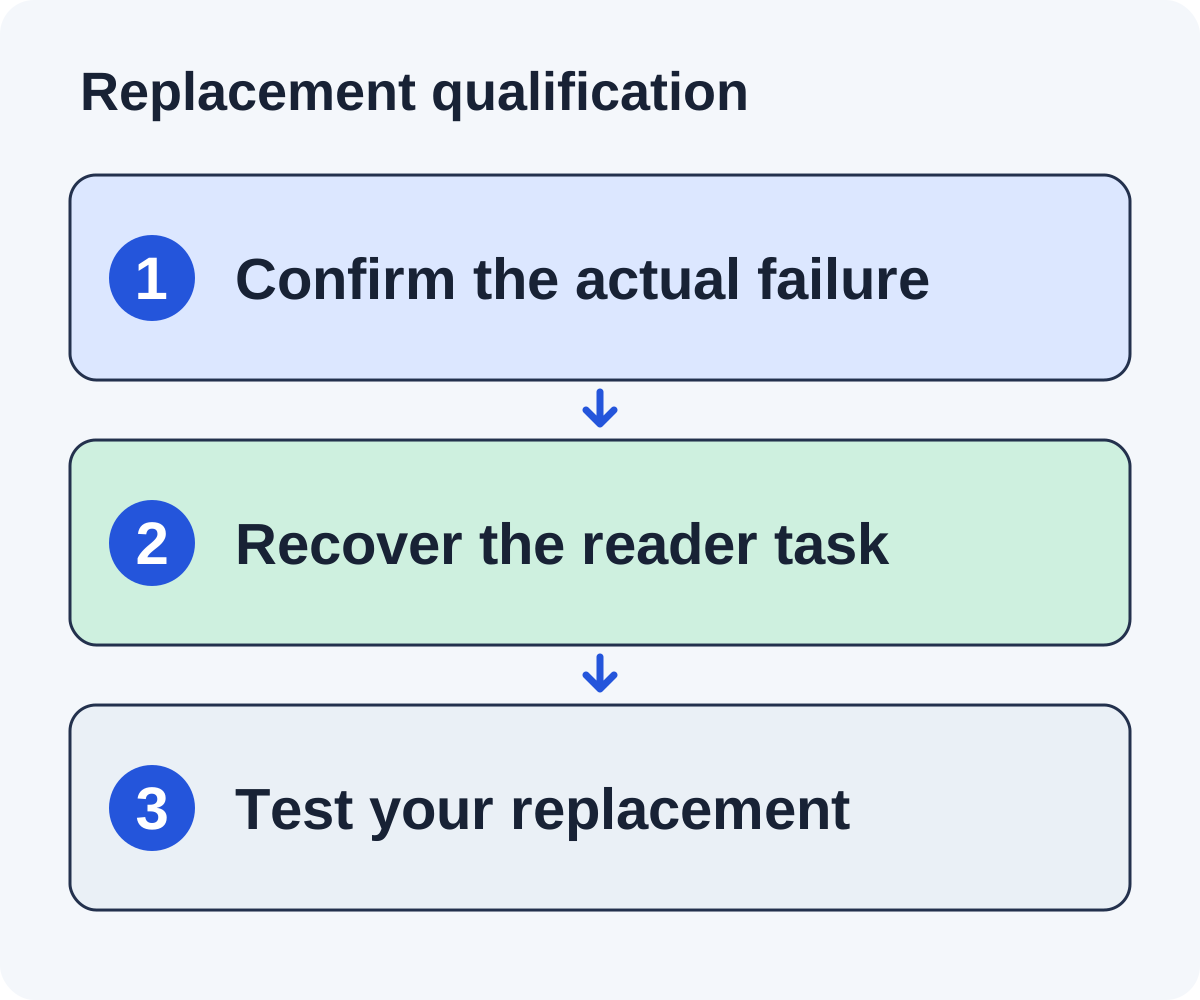
Use a replacement-fit checklist
- Task: Does the replacement answer the same reader question?
- Scope: Does it cover the detail the referring paragraph expects?
- Access: Can the reader obtain the promised material?
- Accuracy: Are calculations, references, and limitations current?
- Identity: Is ownership clear without implying an affiliation with the old resource?
Compare accepted and rejected examples. A public worksheet that handles annual-plan refunds can be a fit for a paragraph on that calculation. A signup-only analytics dashboard with no accessible explanation is a weak replacement for a free tutorial, even if it belongs to the same industry.
If your page only partly fits, explain the limitation or improve the asset. Do not hide a missing step under broad claims such as “covers everything.”
Compare the replacement against the original job
Consider this fictional case: a tutorial’s annual-subscription section links to a disappeared refund worksheet. Its sentence promises an example that deducts a partial refund from recurring revenue. Your resource includes a worked refund calculation, definitions, and a downloadable worksheet. Similar subject matter is only the first check; the promised reader task determines whether the replacement fits.
| Question | Observed answer | Decision |
|---|---|---|
| Does it explain the promised calculation? | A refund example shows inputs and result. | Fits this paragraph’s task. |
| Can the reader access it? | The explanation and worksheet are public. | Access matches the original promise. |
| What does it omit? | It does not cover tax or multi-currency adjustments. | Disclose the boundary if the tutorial expects them. |
| Who maintains it? | Your organization is named on the page. | Disclose your affiliation in outreach. |
If the surrounding tutorial specifically promises multi-currency handling, this replacement fails the scope test. Improve the resource or skip the request. Do not make the match appear stronger by referring only to the general word “revenue.”
Historical snapshots, when accessible, can clarify what the original resource did. Treat them as research evidence, not text to reproduce. If no historical material is available, state what the referring sentence establishes and what remains unknown. Your own asset can be a useful alternative without being an identical replacement.
Write the fit explanation before contacting the editor; it becomes the substance of your reply after they say yes: “This worksheet supplies the refund calculation described in the annual-plan paragraph; it excludes tax adjustments.” If that explanation is vague, the opportunity is not ready. This short internal note also helps a second reviewer check your reasoning independently.
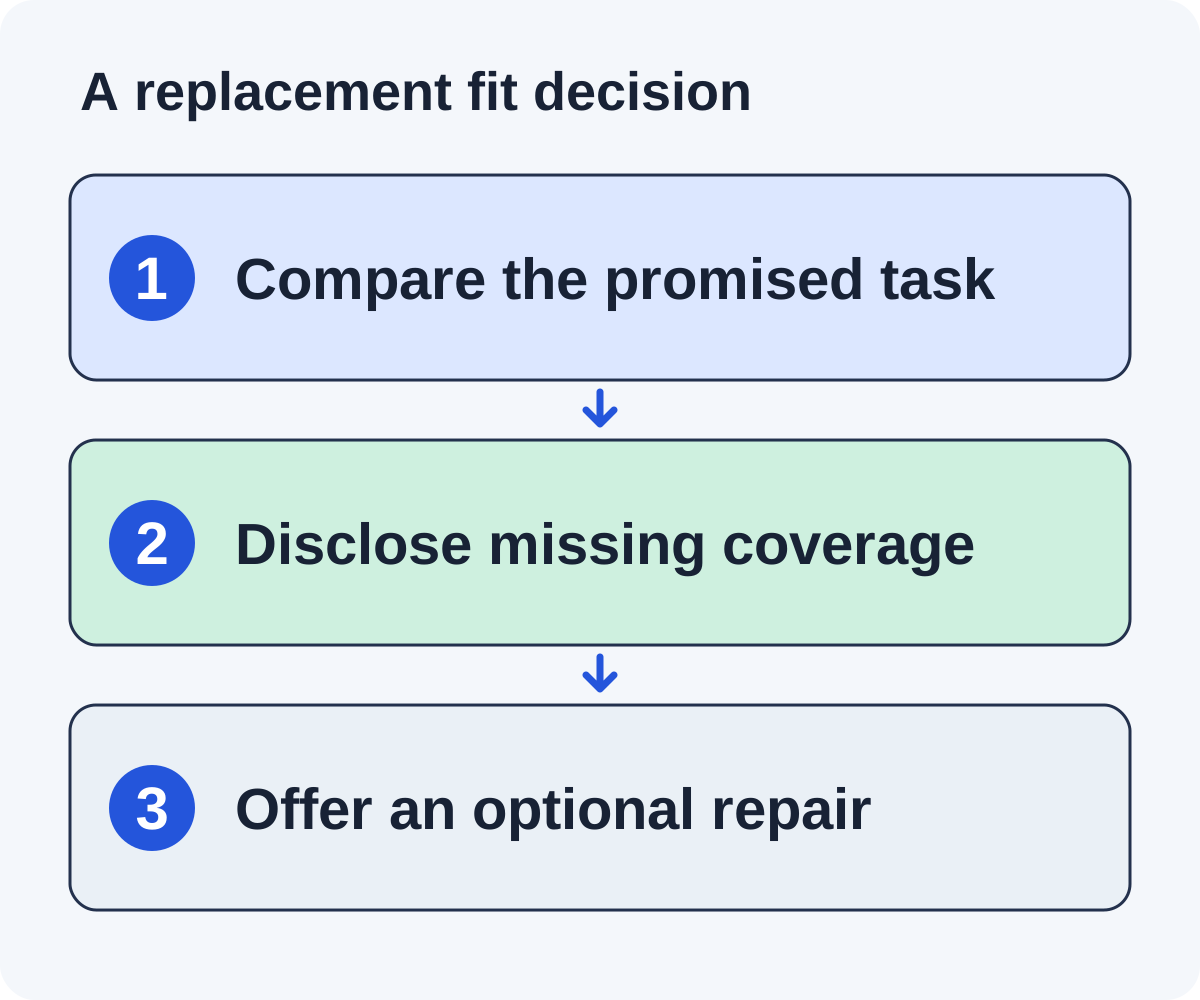
Write an accurate issue-and-resource message
Hi Alex, the worksheet link in your annual-subscriptions section returned a not-found page when I checked today. I’m with a team that makes SaaS finance tools. Would you be open to a link suggestion for that section? If so, I can send the details.
After Alex says yes, the reply describes the public worksheet covering annual-plan calculations, including its refund example, and gives the link at [real URL]. The first email carries no link of yours.
These are fictional examples. Replace the observed status, section, and resource with checked facts. If the destination only failed once with a server error, say that instead of asserting that it is permanently gone.
The editor may repair the original destination, remove the reference, or choose another resource. Present yours as an option once they say yes. Reporting a broken link does not create an obligation to cite your site.
Do not imply that Linkade automatically discovers or replaces every broken link. This guide describes a manual qualification method; evaluate any software against the exact task you need.
Send a repair note the editor can act on
The editor needs enough information to find and assess the issue. In the first email, name the referring page or heading, the check date, and a plain description of the observation, then ask whether they would be open to a suggestion. After a yes, give the exact destination that failed and your replacement. Avoid an alarming subject line implying that the whole site is broken when you checked one reference.
Subject: Worksheet reference in the annual-plan section
Hi Casey, the refund worksheet linked from your annual-plan example returned a not-found page when I checked today. It is under [section heading]. I’m with a team that makes SaaS finance tools. Would you be open to a link suggestion for that spot? If so, I can send the details.
After Casey says yes:
Thanks, Casey. The failed reference points to [old URL]. We maintain a public worksheet with a worked refund calculation: [new URL]. It excludes tax adjustments. If you are updating that reference, it may fit the example.
The second message makes the limitation visible. Replace every bracketed field and confirm the observation before sending. If the original URL redirects to a working equivalent, report that instead; you may have no replacement request to make.
Keep the broken-link report useful even if the publisher chooses a different resource. Do not attach a demand for a particular anchor, a second unrelated placement, or an assertion that the editor owes you a citation. An editor may repair the old link, replace it with another source, remove the sentence, or leave it unchanged.
If you found several failures on one page, report the relevant ones clearly without converting the message into a long automated audit. The publisher should be able to check your observation in a minute. If a contact policy offers a corrections form, use the appropriate route instead of finding an unrelated employee’s address.
Verify the resulting update
Inspect the live referring page after a response. A repaired original link, a removed reference, and a link to your resource are three different outcomes. Record each honestly.
When your resource is added, check that the surrounding text still describes it accurately. If the original paragraph promises a feature your replacement lacks, ask for a factual adjustment rather than accepting misleading context.
Maintain your own destination so the publisher does not inherit another broken reference. Use stable URLs and review important resources after migrations or access changes.
The quality checklist adds page-level review when available. The worksheet below keeps status evidence, original purpose, and replacement fit in one record.
Distinguish an obsolete version from a missing resource
A fictional developer tutorial links to an API version guide that now redirects to documentation for a newer version. The destination returns successfully, but the tutorial’s steps still describe the older version. The issue is a version mismatch, not necessarily a broken URL.
Inspect the tutorial’s intended scope and the destination’s current version. If the older documentation remains accessible through a version selector, the appropriate repair may be that route. If the tutorial is meant to teach the new version, the publisher may need to revise the whole example.
Your migration checklist can be useful only if it covers the actual transition and assumptions. Do not describe a generic integration article as an equivalent replacement for a version-specific reference. Save the supported and excluded cases in the fit record.
A first note might say that the reference now leads to current-version documentation while the surrounding example appears to use the older version, and ask whether the publisher would be open to a suggestion. After a yes, supply the checked route or optional resource and let the publisher determine the correction. Avoid asserting a permanent failure you did not observe.
If the original destination becomes available again, update your record. If the publisher rewrites the example, re-evaluate fit before following up. The opportunity can change while your research is underway.
This case illustrates why status checks need surrounding context. A successful response can still fail the reader’s task, and a redirect can be entirely appropriate. The outreach decision depends on the observed promise and useful resolution.
Troubleshoot failures and maintain your own resource
The checker fails, but the browser works
Save that discrepancy and investigate access restrictions or request behavior. Do not describe the link as dead. A destination that is usable by a normal reader may not justify a repair request even when your automation cannot retrieve it.
The old link redirects to a generic homepage
Inspect whether the promised resource is still reachable. A successful response code alone does not establish a useful destination. Describe the actual issue accurately: the old worksheet route now lands on a general page and the expected calculation could not be located.
The replacement is behind a signup
Compare access with the original promise. If readers expected a public tutorial, a gated product is not equivalent. Make the useful explanation public, disclose the different access requirements, or reject the opportunity. Do not hide the gate in the pitch.
The publisher repairs the original link
Record a repaired reference, not a backlink to your site. The outreach still supplied a factual observation, but its outcome differs from an added citation. Check the live page before labeling the campaign result.
After earning a reference, keep your destination stable. Recheck calculation examples when assumptions change, retain a useful redirect during migrations, and show readers who maintains the resource. Broken link building loses its reader benefit if your replacement becomes the next abandoned asset.
Put it to work
Use the companion worksheet to apply the decisions in this guide to your own campaign.
Download the worksheet (.txt)Sources and further reading
See what is worth pitching for your site.
Linkade finds relevant pages and writes pitches from their content. Add your domain and inspect prospects before choosing a paid plan.
Start free